
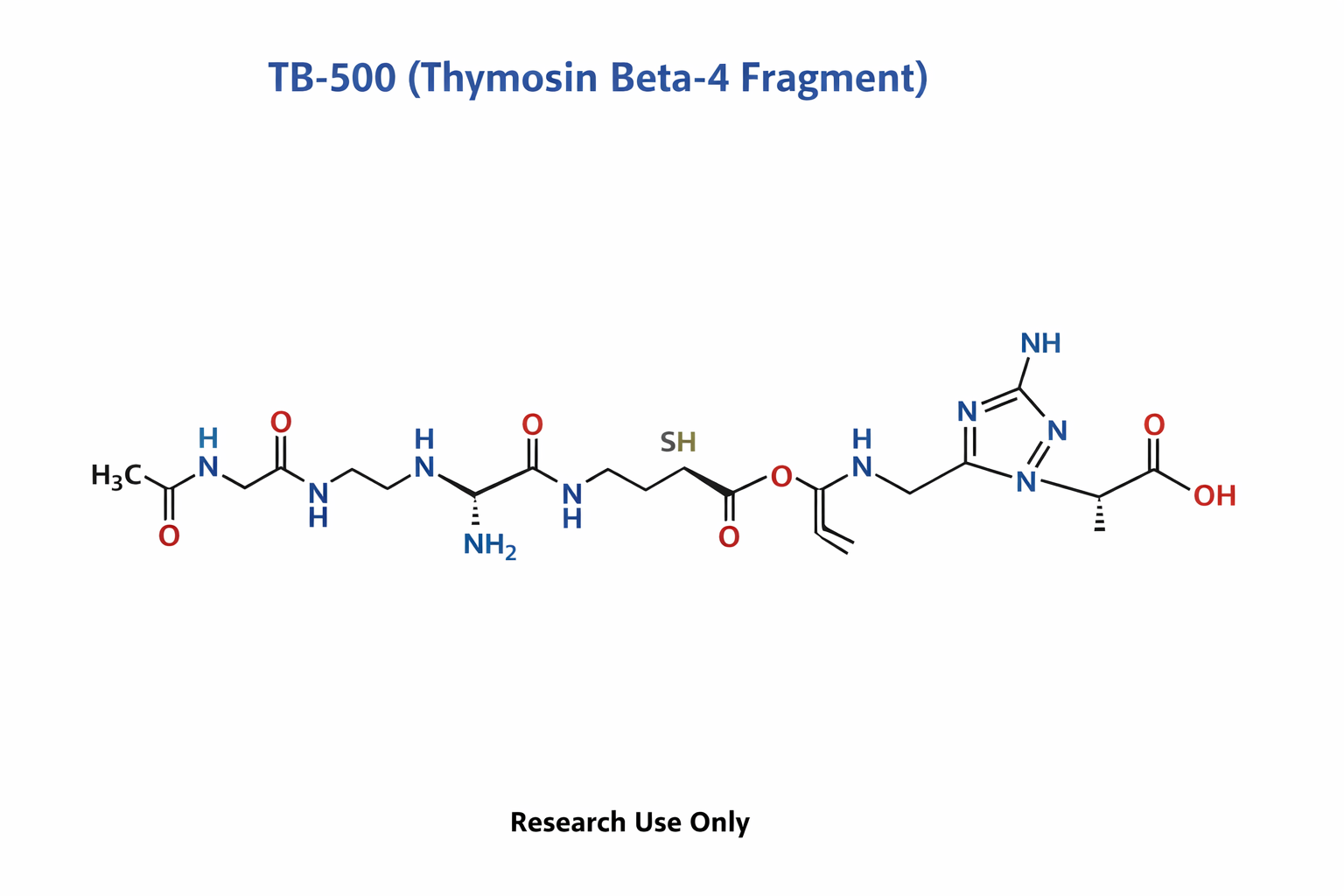
Description
TB-500 (Thymosin Beta-4 Fragment) – Research Peptide
TB-500 is a synthetic peptide fragment derived from Thymosin Beta‑4, a naturally occurring peptide found in many mammalian tissues. In research settings, TB-500 has been studied for its role in cellular migration, tissue regeneration pathways, and cytoskeletal organization. Because of these properties, it has attracted attention in laboratory studies involving recovery, wound healing mechanisms, and angiogenesis.
As a fragment designed for stability and research usability, TB-500 is frequently utilized in experimental models examining how peptide signaling influences actin regulation and cell movement. Studies have explored its effects on the modulation of actin polymerization, a process essential for cell structure, repair, and intracellular transport.
Researchers investigating TB-500 commonly focus on its potential involvement in:
-
Cell migration and differentiation pathways
-
Angiogenesis and vascular tissue formation
-
Tissue repair and regeneration mechanisms
-
Inflammatory response modulation
Due to these characteristics, TB-500 is often included in controlled laboratory studies examining musculoskeletal repair processes and systemic peptide signaling.
Key Research Characteristics
-
Synthetic fragment of Thymosin Beta-4
-
Investigated for effects on actin regulation and cellular movement
-
Studied in laboratory models involving tissue repair pathways
-
Commonly used in peptide and regenerative biology research
Important Notice
TB-500 is intended for laboratory research purposes only. This compound is not approved by the U.S. Food and Drug Administration (FDA) for human or veterinary use, and it is not intended to diagnose, treat, cure, or prevent any disease. It should only be handled by qualified professionals in a controlled research environment.

Reviews
There are no reviews yet.